
Building in public means showing the real numbers, the real mistakes, and the real process. Most people won't do it. That's exactly why it works.
In 2013, I learned how to build a personal brand by following creators who were one step ahead of me, not the gurus a few miles ahead. They posted their real numbers.
They showed their mistakes. They explained the decisions they were unsure about. That transparency was the entire reason I trusted them.
I am doing the same thing now.
Most people will not. The numbers are embarrassing early on.
The mistakes are visible. The progress is slow. That is exactly why it works.
What does building in public mean?
It means sharing the real process. Not just the wins.
The decisions you are unsure about. The posts that flopped.
The subscriber count that sat at 12 for three months. The revenue line that is still zero.
It means you do not wait until you have results to start talking. You talk about the work before the results exist.
Why most people will not do it
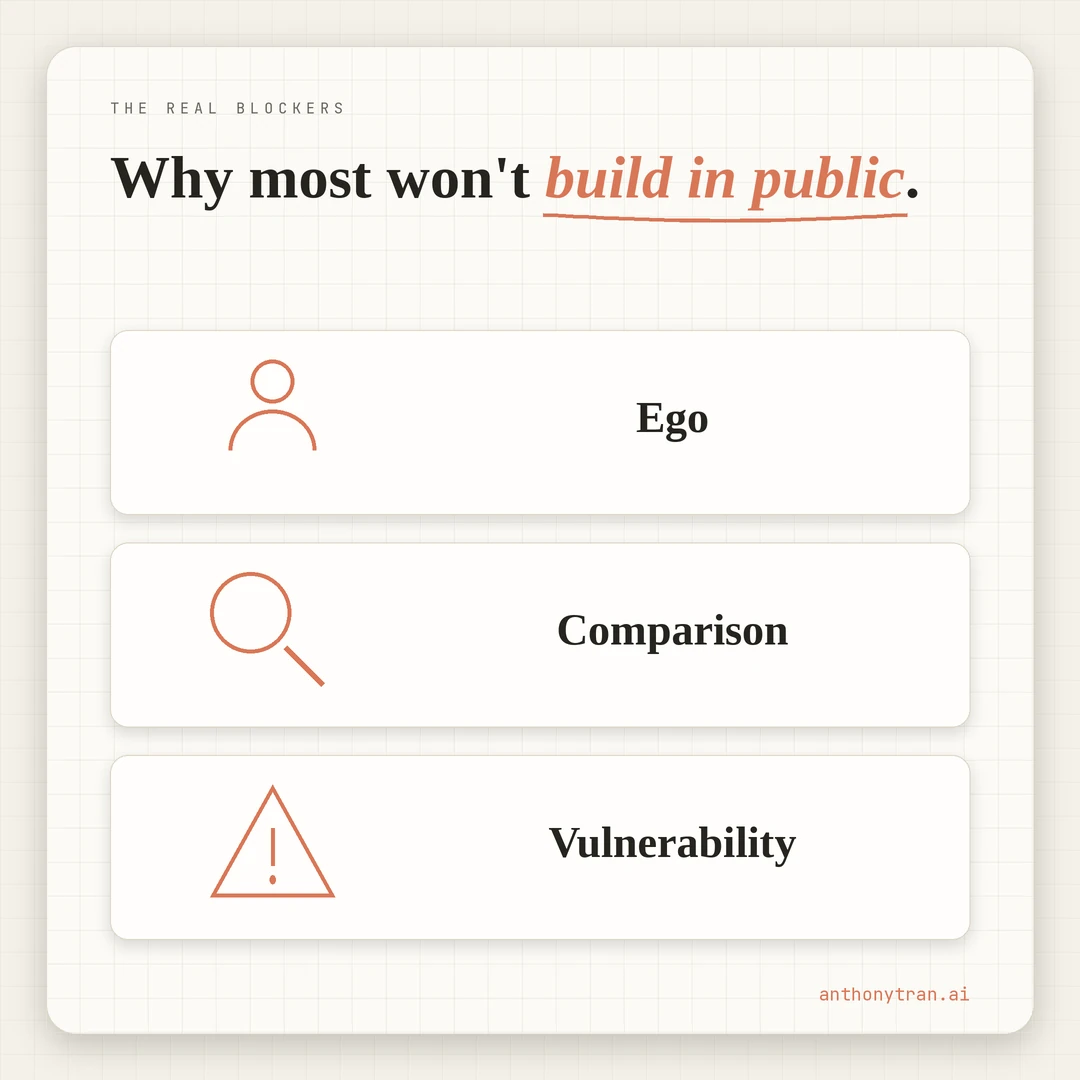
Three reasons.
First, ego. Nobody wants to show zero subscribers.
Nobody wants to admit they are figuring it out. We are trained to present the polished version.
Show the result, not the mess. Building in public flips that.
Second, comparison. If you are sharing your real numbers and someone else has 10x your audience, it feels like you are losing in public.
The fear of being seen as small keeps most people quiet until they feel “big enough. That day never comes.
Third, vulnerability fatigue. Showing the real stuff is tiring.
You are exposing decisions before you know if they are right. You are sharing failures while they still sting.
It takes a kind of emotional stamina that most content advice does not prepare you for.
Those three reasons are why most personal brands wait until they have made it to start sharing. By then, they have skipped the most relatable part of the journey.
Why I am doing it anyway
The first time I built a personal brand, I only showed the highlight reel. The conferences I spoke at.
The features in Entrepreneur and Huffington Post. The wins.
It looked impressive from outside. It was not sustainable from inside.
By 2018 I had burned out, partly because I was performing instead of being honest.
This time the whole thing is out in the open. Not because performing was wrong.
Because performing was lonely. Building in public puts you in real conversation with the people on the same road. The road is the brand.
The other reason: the content that helped me most when I started in 2013 came from people who were one step ahead, not a few miles ahead. That is the role I want to play now.
Not the guy who already built a huge audience telling you how easy it is. A few steps ahead on the same road, sharing what I am trying, what is working, and what is not.
The counter-argument
Some people will say building in public is just a content strategy. A way to create content without results to show for it.
And honestly, that is a fair point. If building in public becomes all process and no progress, it is just noise.
The guardrail is this: the public part serves the audience, not the ego. Every post about my process should include a lesson someone else can use.
“I tried this and here is what I learned” is useful. “Look at me doing the thing” is not.
I check every build-in-public post against the same filter I use for everything else. Does this help the reader save time, save money, make money, or make things easier? If the honest answer is no, it does not ship.
Why it works when done right
Three things happen when you build in public.
Trust compounds. People who watch you figure it out in real time trust you more than someone who shows up polished.
They saw the work. They know it is real.
Content creates itself. The journey generates the content.
I do not need to brainstorm topics. The decisions I make each week are the posts.
The mistakes become lessons. The wins become proof.
The right audience finds you. People who resonate with the messy, honest version of building are the people who will stick around.
They filter themselves in. The people looking for shortcuts filter themselves out.
What this looks like for me
I am sharing my process for picking a niche, writing an origin story, choosing a visual identity, building a website, selecting tools, setting up content systems. All of it using AI. All of it documented.
When the numbers are small, I will share them. When something fails, I will say so. When I change my mind about a decision I made three months ago, I will explain why.
You might notice I have rewritten these foundation posts more than once. That is the whole point.
The thinking evolves and the public gets to see it. The first time I built a personal brand, I would have hidden the rewrites and only shown the final version. This time the rewrites are part of the story.
Put This Into Practice
Here is a prompt you can paste into Claude, ChatGPT, or any AI tool right now.
I want to start building my personal brand in public but I’m not sure what to share. Help me figure out what’s worth posting and what’s just noise. Ask me these questions one at a time and wait for my answer before moving on:
- What are you working on right now for your personal brand? Describe where you are in the process.
- What decision are you struggling with or unsure about this week?
- What’s something that didn’t work recently or that you’d do differently?
After I answer all three, turn each answer into a one-paragraph post idea that shares the real process and includes a lesson someone else can use. Make sure each one passes this test: does it help the reader save time, save money, make money, or make things easier? If it doesn’t, rework it until it does.
If you want to follow the journey from the beginning, start with the manifesto. Or read about the Me vs Them Trap if you are wondering how to keep your content about the audience while building in public.
Come build with me.
Frequently asked.
What does building in public mean?
Building in public means sharing the real process, not just the wins. That includes the decisions you're unsure about, the posts that flopped, and the subscriber count that sat at 12 for three months. You don't wait until you have results to start talking. You talk about the work before the results exist.
Why do most people refuse to build in public?
Three reasons: ego (nobody wants to show zero subscribers), comparison (fear of being seen as small keeps most people quiet), and vulnerability fatigue (showing the real stuff before you know if decisions are right takes emotional stamina most content advice doesn't prepare you for).
Does building in public actually work for a personal brand?
Yes, when the public part serves the audience, not the ego. Trust compounds when people watch you figure it out in real time. The journey generates your content automatically. And the right audience self-selects in while people looking for shortcuts filter themselves out.
Stop re-explaining yourself to Claude.
Grab the free AI Starter Kit: my exact Claude setup, so it knows your business. Plus the lessons as they land.
Anthony Tran
13 years in marketing and an Air Force veteran. I use Claude every day to market and grow my own business, and I break down what works in plain English. Writing and recording from Arizona.