I ran a podcast with 75 episodes and 141 five-star reviews and still quit. Here is the one human I am writing for now, and how AI helped me find him.
I launched a podcast in 2013. I hit 75 episodes and 141 five-star reviews. I still quit.
The podcast that was working
It was called Marketing Access Pass. MAP for short. The pitch was a roadmap to online success for people trying to build a business on the internet.
The mic was one of the best on the market. I spent real money on the setup.
I sat in the living room of our condo in California and put in the hours. Linh was building the agency side.
I was building the audience side. We were doing this thing.
The numbers grew. The list grew.
People wrote back saying they liked it. A few even walked up to me at conferences and recognized my voice.
At one point the show was sitting on iTunes next to Pat Flynn, Lewis Howes, John Lee Dumas, and Michael Stelzner. Their shows had massive audiences.
Mine was in the same grid. Company I did not deserve yet.
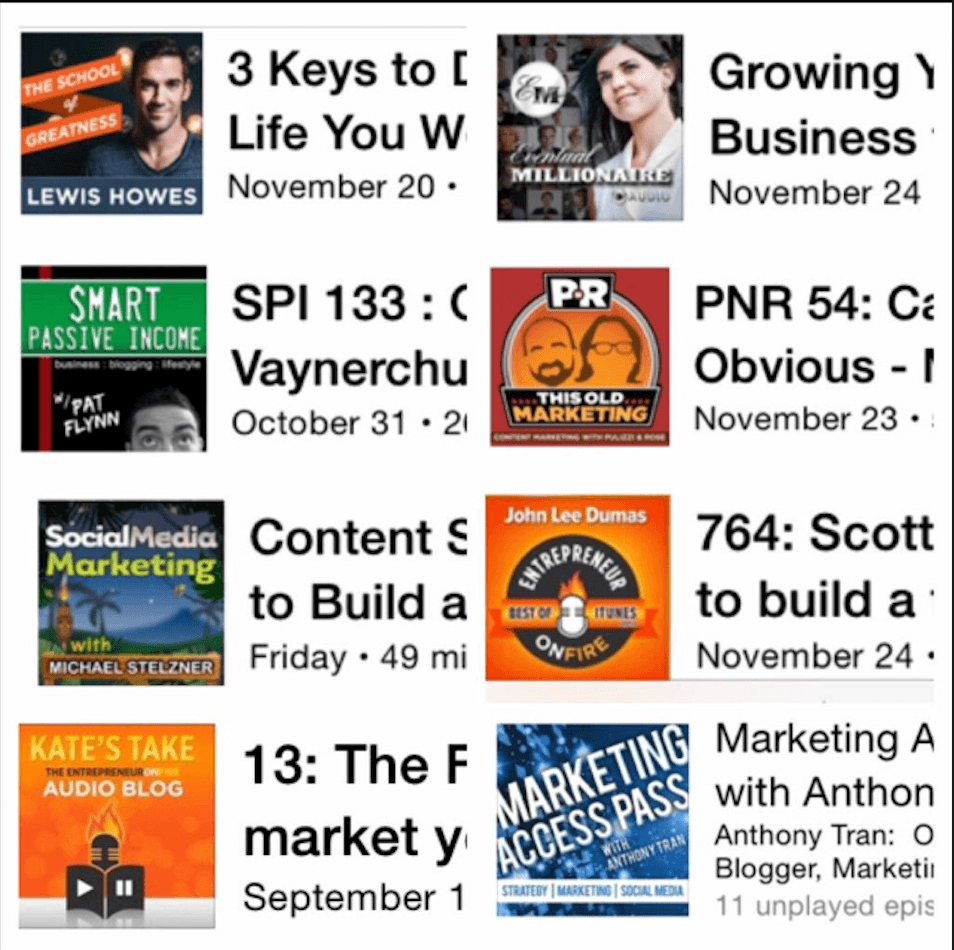
My show sitting next to Pat Flynn, Lewis Howes, and John Lee Dumas. Company I did not deserve yet.
It was not that no one was listening. It was that I could not name the one person I was making it for.
Why “entrepreneur” isn’t a person
My website was a pile of everything. Podcast episodes.
Video tutorials. WordPress how-tos.
SEO posts. Social media tips. The whole digital marketing umbrella.
At every conference, at every meetup, someone would ask the same question. “So what’s your niche? Who do you actually help?”
I did not have a clean answer. I was a podcaster and a web designer and an SEO guy and a WordPress guy and a video guy.
I was chasing every revenue line at once. Recording, interviewing, editing, publishing, sharing.
All of it me. All of it for “entrepreneurs,” which turns out is not a person.
“Entrepreneur” is a census category. A 24-year-old dropshipper and a 58-year-old plumbing company owner both check the box.
They do not listen to the same shows. They do not have the same worries.
They do not care about the same things. Writing to both at once means writing to neither.
I knew this on paper. Every marketing book I had read said the same thing.
Pick the specific person. Write to one human. I had told clients the same thing a hundred times.
I still ignored the rule on my own project. Mostly because picking one person felt like giving up on everyone else.
I burned out before I admitted it. Not because the content failed.
Because I was doing the work of five people for an audience I could not describe in one sentence.
How to know your niche is specific enough
When I started over this year, I did one thing different. Before I wrote a word, I picked one human.
A guy in his mid-40s with a couple decades of real career experience. Has a kid, a mortgage, and a gym membership he uses twice a month.
Sole breadwinner. Good at his job.
Two or three hours a day to spare. Usually at 5 AM before the house wakes up, or 10 PM after it goes to sleep.
He is tired. Not the cartoon burnout kind.
The quiet kind. Where the work still gets done but nothing feels like his anymore.
He has watched AI chew through things he used to charge for. He is scared about what the next five years look like.
He does not want to quit his job tomorrow. He wants to build something that is his on the side, before he has to.
That is who I am writing for now. Not because he is the biggest market.
Because he is me. I have the steady job, the family, and the quiet feeling that I should be building something of my own again.
I just did not have the tools to do it without burning out a second time.
I used Claude to pressure test the niche before I committed. Fed it the rough idea and asked it to poke holes.
Asked it to map the audience’s daily worries. Asked it to find where this person was already gathering online, which podcasts he listened to, which newsletters he opened.
The tool did not pick the niche for me. It made me defend mine out loud until the weak spots fell off.
Every time Claude asked “why this person and not a broader group,” I had to answer. Half my answers did not survive.
By the end I could describe my reader in one paragraph without stumbling. I could name three problems he had that week. I could name the podcast he probably listened to on his drive.
Here is the test. Write down the human.
One person. Describe the part of their day where your content would help.
If you cannot do that in one paragraph, the niche is still too wide.
The 2013 me could not have passed that test. The 2026 me can. That is the difference.
The part I am still getting wrong
I am not claiming I have got it right now.
But “men in their mid-40s with full-time jobs who want to use AI to build something of their own without burning out” is specific enough to write a post to. More than I could ever say for “entrepreneurs.”
Picking one niche is just subtraction with a sequence. Cut the wide audience first. Earn the right to expand later if it makes sense.
Put This Into Practice
Here is a prompt you can paste into Claude, ChatGPT, or any AI tool right now.
I’m trying to pick a niche for my personal brand. I have experience in [your field] and I think I want to help [rough idea of who]. But I’m not sure if that’s specific enough. Walk me through these questions one at a time and wait for my answer before moving to the next:
- Describe one specific person I want to help. Not a category. One human. What’s their age, job, and daily life like?
- What part of their day would my content actually help with?
- What are three specific problems they have this week, not this year, this week?
- Where do they already go for help? What podcasts, YouTube channels, or newsletters?
- Why would they listen to me instead of someone bigger?
- If I write “entrepreneurs” or “business owners” anywhere in my answers, push back and make me get more specific.
After I answer all six, tell me if my niche passes this test: can I describe my reader in one paragraph without stumbling? If not, tell me where it’s still too wide and help me tighten it.
If you can describe your reader in one paragraph and name three problems they had this week, you have a niche worth building on. If you cannot, keep going until you can.
If you want the bigger picture of what I am doing here, the manifesto post is where this series starts. Read the manifesto.
Come build with me.
Frequently asked.
Why isn't 'entrepreneurs' a valid personal brand niche?
Entrepreneur is a census category, not a person. A 24-year-old dropshipper and a 58-year-old plumbing company owner both check that box but don't listen to the same shows, share the same worries, or care about the same things. Writing to both at once means writing to neither.
How do you know your niche is specific enough?
Write down one human. Describe the part of their day where your content would help. If you can do that in one paragraph without stumbling, you have a workable niche. If you can't, it's still too wide.
How can AI help you pressure-test your niche?
Feed your rough niche idea to Claude or any AI tool and ask it to poke holes. Ask it to map your audience's daily worries, find where they gather online, and identify which podcasts they listen to. Every time the AI asks why this person and not a broader group, you have to answer. What survives is a niche worth building on.
Stop re-explaining yourself to Claude.
Grab the free AI Starter Kit: my exact Claude setup, so it knows your business. Plus the lessons as they land.
Anthony Tran
13 years in marketing and an Air Force veteran. I use Claude every day to market and grow my own business, and I break down what works in plain English. Writing and recording from Arizona.