Most personal brand sites are stacked with credentials. Featured In, Speaking, Books, Podcasts, Testimonials. Mine has five pages, and none of them mention thirteen years of marketing.
The Saturday morning the website got built
It was a Saturday morning. I poured a cup of coffee and let Alice out of her crate.
She joined me in the office the way she does every morning, padding over to the small bed in the corner with a blanket over it and an electric warm pad underneath. Spring in Arizona, but the morning was still cold, and Alice likes to be warm.
I had already finished my morning routine, the small admin loop of email and bills that gets me ready to think. Then I sat down to start on the website.
The visual side I already had in hand. AI had helped me build a design system around the Architect archetype, with blueprint colors, grids, and a navy and cyan palette.
The Architect fit because the rest of my color story already lived in the same family. My other businesses ran in blue, and my Air Force years ran in navy.
Different work, same blue. The brand looked right on the first pass.
The structure was harder.
The page list problem
I started looking at other personal brand websites to see how they were built, and the page lists were long.
Most sites I looked at had around eight pages. Home, About, and Blog at the core.
Then a Featured In page with publication logos, a Speaking page with conference logos, a Books page, a Podcast page, and a Testimonials page. Some had a Services page or a press kit on top of that.
Each page promised another piece of the creator’s authority. Another offering, another corner of credibility staked out.
I had thirteen years of marketing behind me. I had run a podcast with seventy-five episodes and one hundred and forty-one five-star reviews, spoken at conferences, and been featured in publications I would still be proud of today. I had other businesses still running.
I could have built every one of those pages on the first weekend.
I almost did.
What I cut
I almost built a Featured In page. I had the publication logos saved in a folder.
I almost built a Speaking page. I had the conference list and the dates.
I almost built a Services page. The agency I run with my wife is still active and could have lived right there in the menu.
Then I cut all of it.
Not because the credentials were bad, but because they did not fit who I was trying to talk to.
The whole point of this rebuild was starting fresh. I wanted to be talking to someone who was where I was in 2013, not flexing where I am now.
If I led with thirteen years of authority, the right reader would feel they could not relate, and the wrong reader would treat me like a guru. Both of those are bad.
The first one scares away the audience that would actually benefit, and the second one pulls in the audience that just wants a shortcut.
The mistake I made the first time around was leading with the highlight reel of conferences, features, and wins. From the outside it looked impressive.
From the inside it was exhausting. The whole reason I burned out and went quiet for seven years was that I built the brand around past authority instead of present work, and I am not making that mistake again.
This time I want to be the guide, not the hero, and I want to be just a few steps ahead of the reader. Same road, different mile marker.
That role does not have a Featured In page. I have written more about that frame in the Me vs Them Trap, and the hero/guide split sits at the heart of StoryBrand.
So I started fresh on the website too. No publication logos, no flex page, no cred-stacking. Just five pages.
What pages does a personal brand website need?
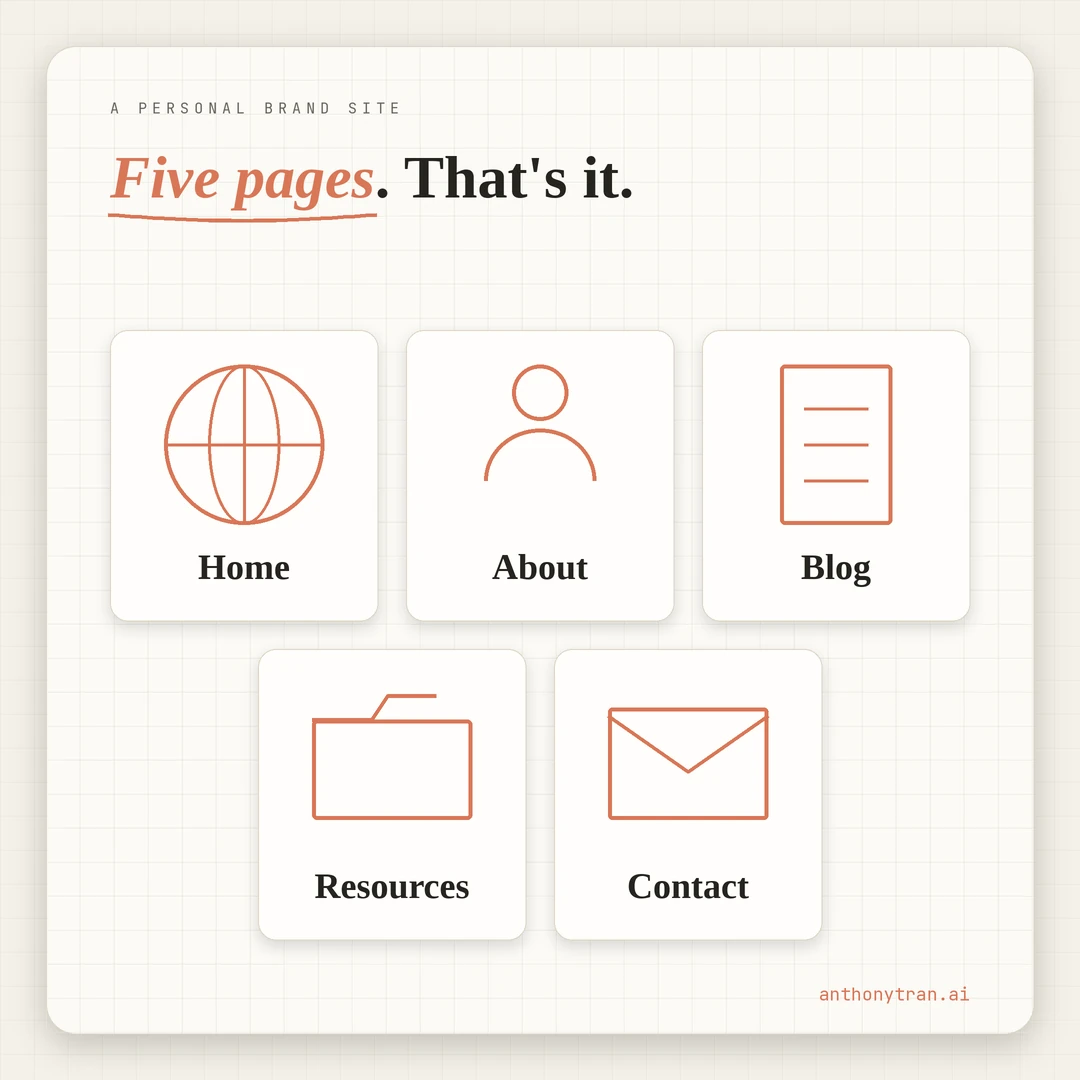
Home. About.
Blog. Resources. Contact.
That is the full list. Privacy and disclaimer pages exist because every site needs them, but they are invisible and do not count toward the real structure.
Here is what each one does and why it earned its spot.
Home
First impression. The home page compresses the brand story into something the reader can take in quickly: who I am, who I am writing for, and what the project is.
The home page is the trailer, and the rest of the site is the movie. If the home page does not give the reader a reason to click into the rest, the rest does not matter.
About
This is where the brand story lives in full. The trap on an About page is making it about you.
The fix is making it about the reader. Every paragraph passes that test or it does not ship. The reader is the hero, and I am the guide.
Blog
The engine. Every long-form piece I write lives here, and posts compound over time.
A blog post written today can show up in search results for years, and email subscribers and YouTube viewers are still finding posts I wrote weeks ago. Without the blog, none of the rest of the funnel has anything to fill it.
Resources
A small page that lists the actual tools and frameworks I use, with no affiliate links and no bloat. The reader gets to see what is in my real stack, which is trust building before anything is sold.
Give before you ask. The difference between Resources and a Featured In page is who the page serves.
A Featured In page tells the reader what I have done. A Resources page hands the reader something they can use today.
Contact
Low friction. A short form, an email address, a real way to reach me.
Most personal brand sites bury contact under three layers of opt-in. Mine sits one click from the home page.
That is five pages, less than half of the eight-page average I started with. The privacy and disclaimer pages are still there in the footer, but they are utility pages and not part of the structure.
Why less is more on a new personal brand website
There are two reasons less wins, especially at the start.
Pressure. Every page I add is a page I have to fill with something worth reading. A Speaking page that says “coming soon” hurts the brand more than not having a Speaking page at all. A Books page with no books pushes the reader away from the actual content I do have. Empty real estate is louder than no real estate, and the reader always notices the gap.
Focus. The reader has a limited number of clicks they will give a new website. With eight pages, those clicks scatter. With five, they go where they were always going to go: home, about, blog, maybe resources. The shape of the site nudges the reader toward what actually matters.
You can always add later. I might build a Speaking page in 2027 if speaking becomes part of the work.
I might add a Services page if I open up consulting. None of that has to exist on day one. Day one needs the foundation, not the trophy room.
This is the same filter I used when I cut my platform list from nine to three before posting anything. The logic is the same: subtract before you have to, and earn the next thing before you add it.
Put This Into Practice
Here is a prompt you can paste into Claude, ChatGPT, or any AI tool right now.
I am building a personal brand website. Help me decide which pages to keep and which to cut. Ask me these questions one at a time and wait for my answer before moving on:
- List every page you have or plan to build, including ones you are tempted to add.
- Who is the reader you are trying to reach? Describe them in one or two sentences.
- For each page on your list, does it serve that reader, or does it serve your past authority?
- For each page, if the reader removed it, would they still understand who you are, what you write about, and how to follow you?
After I answer all four, give me an honest assessment. Tell me which pages to keep, which to cut, and why. If a page is more about flexing my credentials than helping the reader, say so. Be direct.
The prompt is the audit I should have run on myself the first time I built a personal brand. Run it now and you save yourself the rebuild later.
If you want the broader frame for why I am building all of this in public, start with the manifesto. The website is one piece of the rebuild, and the reasoning behind the whole thing lives there.
Come build with me.
~ Anthony
Frequently asked.
What pages does a personal brand website need?
Five pages cover everything most personal brands need at the start: Home, About, Blog, Resources, and Contact. Privacy and disclaimer pages exist on every site but do not count as real pages. Anything beyond those five (Speaking, Books, Testimonials, Featured In, Services) can wait until that section of your work has earned its own page.
How many pages should a personal brand website have?
Five works for most personal brands at the start. Most sites I looked at had around eight pages stacked with credentials. The extra three are usually Speaking, Books, Testimonials, Featured In, or a press kit. None of those serve a reader who is just learning who you are. Add them later when the section of work has earned the real estate.
Should I include past credentials on a new personal brand website?
Probably not at the start. Leading with thirteen years of authority on a fresh personal brand site scares away the right reader, who feels they cannot relate, and pulls in the wrong reader, who treats you like a guru. The fresh-start framing makes you the guide instead of the hero. The credentials can come back later if they actually serve the reader.
Stop re-explaining yourself to Claude.
Grab the free AI Starter Kit: my exact Claude setup, so it knows your business. Plus the lessons as they land.
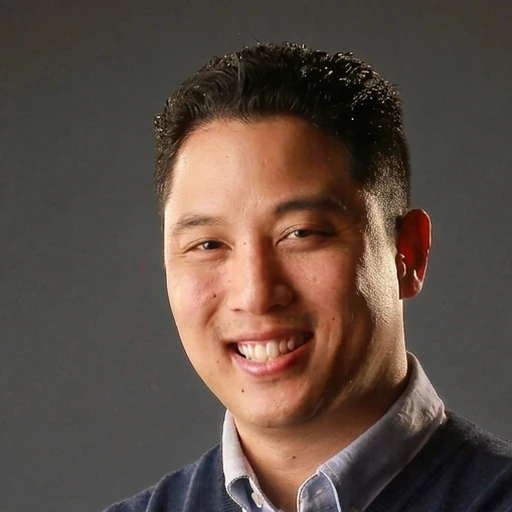
Anthony Tran
13 years in marketing and an Air Force veteran. I use Claude every day to market and grow my own business, and I break down what works in plain English. Writing and recording from Arizona.